Defining the Rick Owens Aesthetic
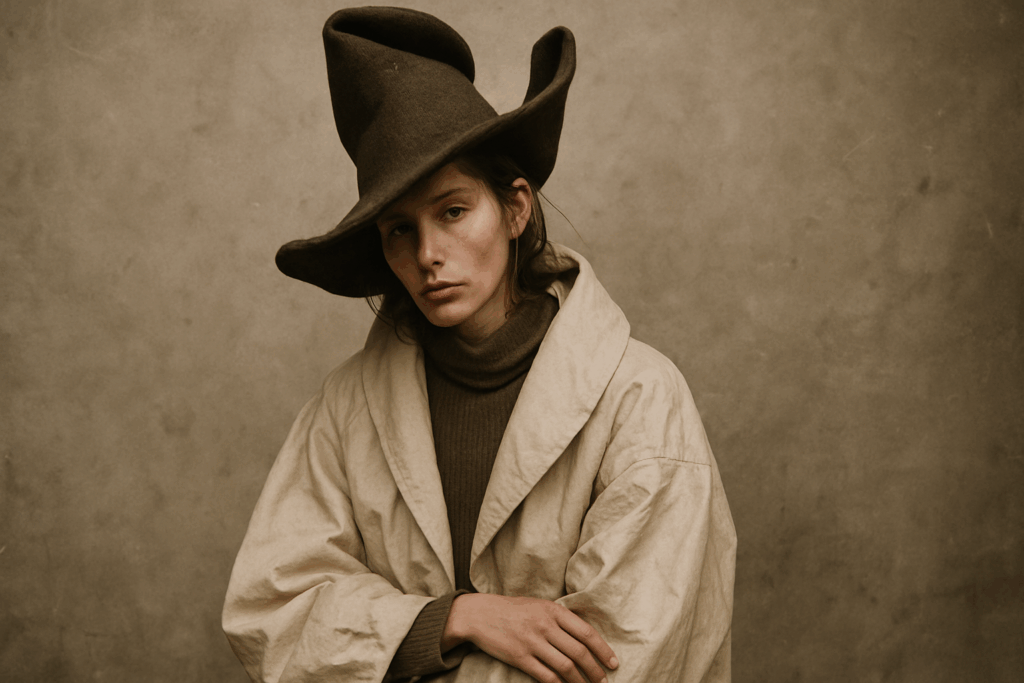
Rick Owens doesn’t just design clothing he shapes a visual code. His pieces move with a purpose, grounded in draped silhouettes that cloak the body without hiding it. These are forms that suggest motion even when still, often exaggerated, but never sloppy. Everything leans minimalist in palette think black, dust, bone, concrete. It’s not about color. It’s about mood.
Then there’s the structure. Brutalist lines cut through softness, balancing raw and refined. Jackets drop heavy over narrow pants, sleeves stretch long past practical, necklines fall low or spike high always something off kilter, yet calculated. The interplay of form and function is constant. Owens takes the rebellion of punk, the shadow of goth, and the structure of couture, and fuses them into something entirely wearable, though rarely conventional.
His materials do just as much talking. Distressed leather that looks scorched. Crepe that drapes like smoke. Cashmere with unexpected weight. There’s a tactile discord at play soft paired with severe, fragile folded into the unforgiving. Abstract textures show up often, hinting at decay, architecture, or some post apocalyptic runway. And somehow, it all works. Owens doesn’t chase beauty. He builds it from contradiction.
Shaping the Avant Garde Since the ’90s
Rick Owens didn’t arrive on the fashion scene with polish he showed up with a growl. In the early ’90s, he was cutting and sewing out of a raw studio on Hollywood Boulevard, absorbing the grit of Los Angeles into a design language that felt part grunge, part monastic. There was no clear roadmap; just sharp lines, draped fabric, and a deep resistance to what was considered desirable.
Everything changed when he hit Paris. His 2002 debut at Paris Fashion Week, backed by Vogue and supported by Anna Wintour, wasn’t just a career pivot it was the global start of a new, darker aesthetic. From that point, Owens started redefining what “fashion forward” could look like: asymmetry, aggression, and androgyny, tightly choreographed into runway experiences that felt more ritual than presentation.
Key moments? Fall/Winter 2014, when his collection featured step teams stomping in military inspired layers instead of typical models. Or Spring/Summer 2016, where models carried one another literally turning support into a visual theme. Every now and then, Owens breaks fashion open just enough to make it uncomfortable then reforms it in his own image.
What began as rebellion now has roots. Owens’ fingerprints are on the luxury streetwear hybrid dominating runways and store shelves alike. Brands like Fear of God, A COLD WALL*, even parts of Balenciaga and Givenchy echo his mix of austerity and drama. He didn’t just influence a generation of designers he made it okay to occupy the fringe and still shape the center.
Philosophy Over Flash
Rick Owens doesn’t do fashion to make things look pretty. He’s more interested in what clothes make people feel discomfort, defiance, control. He rejects the old school glamour of sparkle, polish, and easy beauty. In its place, he offers clothing that makes the person and the moment bigger than life, sometimes even a little monstrous. For Owens, beauty is not about pleasing others it’s the result of raw intention.
That’s where luxury gets twisted in his hands. Instead of conforming to excess or obvious affluence, Owens strips luxury down to its bare form. Brutalist lines, shrouded layers, and monastic color palettes throw out the rulebook. There’s no need to flex with logos or sequins. His version of high end is almost anti luxury private, personal, severe.
And then there’s Rick himself. Often dressed in his own designs, he’s his clearest muse. Long hair, platform boots, sculptural tunics he lives inside the world he creates. It’s not marketing. It’s who he is. That personal style, unapologetically singular, acts as a kind of protest against trends and expectations. In a world selling sameness, Rick Owens is making armor for the outliers.
Sustainability, But on His Terms
Rick Owens doesn’t do sustainability the way fashion likes to hashtag it. There are no big green campaigns or carbon neutral slogans stitched into his hems. Instead, there’s a deliberate refusal to over produce. Pieces are made to last, often in limited runs. He brings old fabrics back to life, favors local production, and leans into tension between past use and future form.
Upcycling, for Owens, isn’t just a technical choice. It’s philosophical. Materials carry stories, and reshaping them into something new reflects the way he sees the world: broken but still viable, still interesting. His production pace borders on glacial compared to trend chasing giants. But slow is the point. Designs aren’t tied to seasonal drops they exist outside of that noise. No racing to meet Spring/Summer or Fall/Winter. No dancing for likes.
He’s not anti fashion. He’s post fashion calendar. The industry churns, but Owens moves on his own terms. For a look at another designer redefining sustainability at the luxury level, read The Evolution of Gabriela Hearst’s Eco Conscious Luxury.
Cultural Influence Beyond Fashion
Rick Owens doesn’t just make clothes he builds worlds. His creative orbit pulls in boundary pushing collaborators: choreographers like Michele Lamy’s Finland project, architects like Kengo Kuma, and musicians from noise to neo classical. In each of these links, he’s less interested in visibility and more in shared philosophy. Owens collaborates with those who understand structure, existential elegance, and discomfort by design.
His impact on gender expression is less a statement, more a lived practice. Owens has been queering silhouette and softening masculinity since the early 2000s, long before the mainstream caught up. Fluid tunics, thigh high boots, detached sleeves he pushes against the binary without shouting. He doesn’t force the conversation. He dresses it.
In 2026, Owens stands not just as a designer, but as a philosophical reference point. His brand remains immune to trend churn because it’s never been about taste. It’s about questioning norms, across disciplines. Others chase relevance. Owens builds relevance from rules he’s already broken.
Why Owens Remains Untouchable
Rick Owens never asked for the spotlight it showed up anyway. Despite, or maybe because of, his moody textures and anti glamour defiance, his cult following has only grown stronger. Celebrities wear him, but they don’t co opt him. Fashion insiders revere him, but he isn’t pandering to runways or red carpets. He walks a strange and narrow line between underground respect and global recognition and he does it without compromise.
That loyalty? It comes from clarity. Owens has never diluted his language to be liked. No loud logos, no influencer partnerships just for reach. Fans don’t line up just because it’s trending they come back because the designs say something authentic. Dark, sculptural, sometimes severe, Owens’ work gives permission to embrace the complicated self. His brand doesn’t invite everyone in; it rewards those who get it.
Looking ahead, Owens isn’t following the future he’s building it. While fashion cycles spin faster each season, Owens continues to design on his own terms: slow, intentional, immersive. It’s not about what’s next quarter it’s about shaping the language we’ll use in the decade to come. The avant garde isn’t a trend; it’s a mindset. And Owens remains both its lexicon and its disruptor.

 Ask Michael Fullerstrat how they got into fashion events and runway highlights and you'll probably get a longer answer than you expected. The short version: Michael started doing it, got genuinely hooked, and at some point realized they had accumulated enough hard-won knowledge that it would be a waste not to share it. So they started writing.
What makes Michael worth reading is that they skips the obvious stuff. Nobody needs another surface-level take on Fashion Events and Runway Highlights, Wardrobe Essentials, Style Tips and Advice. What readers actually want is the nuance — the part that only becomes clear after you've made a few mistakes and figured out why. That's the territory Michael operates in. The writing is direct, occasionally blunt, and always built around what's actually true rather than what sounds good in an article. They has little patience for filler, which means they's pieces tend to be denser with real information than the average post on the same subject.
Michael doesn't write to impress anyone. They writes because they has things to say that they genuinely thinks people should hear. That motivation — basic as it sounds — produces something noticeably different from content written for clicks or word count. Readers pick up on it. The comments on Michael's work tend to reflect that.
Ask Michael Fullerstrat how they got into fashion events and runway highlights and you'll probably get a longer answer than you expected. The short version: Michael started doing it, got genuinely hooked, and at some point realized they had accumulated enough hard-won knowledge that it would be a waste not to share it. So they started writing.
What makes Michael worth reading is that they skips the obvious stuff. Nobody needs another surface-level take on Fashion Events and Runway Highlights, Wardrobe Essentials, Style Tips and Advice. What readers actually want is the nuance — the part that only becomes clear after you've made a few mistakes and figured out why. That's the territory Michael operates in. The writing is direct, occasionally blunt, and always built around what's actually true rather than what sounds good in an article. They has little patience for filler, which means they's pieces tend to be denser with real information than the average post on the same subject.
Michael doesn't write to impress anyone. They writes because they has things to say that they genuinely thinks people should hear. That motivation — basic as it sounds — produces something noticeably different from content written for clicks or word count. Readers pick up on it. The comments on Michael's work tend to reflect that.